“Humility of the Saints”: An Interview with Author Patrick O’Hearn
“My friend, if you want to be great, become little.”
St. Josemaria Escriva
Holy Rosary
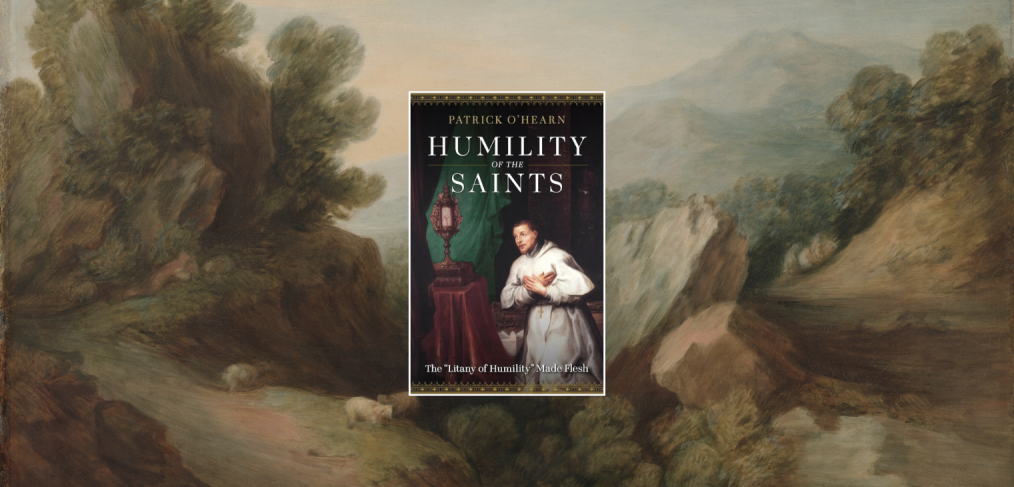
The St. Josemaria Institute is pleased to share this interview with Catholic author Patrick O’Hearn, whose book Humility of the Saints: The Litany of Humility Made Flesh explores the virtue of humility through the lives of more than fifty-five saints and holy souls. Drawing inspiration from Cardinal Rafael Merry del Val’s famous Litany of Humility, O’Hearn invites readers to see humility not as something negative or self-defeating, but as a path to becoming more like Christ. Through the lives of the saints, he shows us what humility looks like when it is lived—in hiddenness, suffering, self-denial, gratitude, forgiveness, and complete dependence upon God.
In this conversation, O’Hearn reflects on the lessons humility has taught him through marriage and family life, the mercy encountered in Confession, the Eucharist as the supreme school of humility, the example of Our Lady, and St. Josemaria Escriva’s call to seek holiness in the ordinary circumstances of daily life.
A Journey Toward the Saints
St. Josemaria Institute: Patrick, could you begin by telling us a little about yourself and your journey of faith?
Patrick: I grew up as the youngest of three boys. Because of my dad’s work, we moved around a lot, but I spent most of my childhood in the Quad Cities, in Moline, Illinois.
After college at St. Ambrose University, I entered a Benedictine monastery because I thought God was calling me to religious life. Eventually, I discerned out and went to Franciscan University of Steubenville for graduate studies, where I met my wife.
Over the years, I have worked in education, business, and publishing. I spent several years as an editor at TAN Books, and through my own sufferings I gradually felt the Lord calling me to write about the saints. I actually hated writing when I was growing up, so I really feel that the Lord gave me this gift.
I’ve always been drawn to the saints. St. Josemaria is one of the saints whose writings have really touched me, especially his emphasis on helping ordinary people understand that they can become holy in their daily lives.
Today, I work in ministry evangelization, helping Catholic apostolates expand their ministries, and I continue to write about the saints. But most importantly, I love being a husband and father. I love spending time with my family, taking walks, reading books to my children, going to Mass, and praying.
Humility Begins at Home
SJI: Speaking of marriage and fatherhood, what has been one of the biggest lessons of humility that you’ve learned through being a husband and father?
Patrick: I think marriage reveals how selfish you can be. We can easily assume that we know what our spouse needs, when in reality, their needs may be completely different from ours. There can be a prideful attitude of, “I know better.”
God has humbled me through marriage and through my children. I have to remember that I am not at the center. God comes first, then my wife, children, and then me.
Frequent Confession has also been important for me. I encourage couples to go to Confession regularly because it really helps us grow in humility. We also need to be willing to apologize to our spouses and even to our children.
I’ve seen how powerful that can be. When I ask my children for forgiveness, they learn to recognize their own faults and ask for forgiveness themselves. We need to admit our faults and not hold on to grudges and resentment in our vocations.
Why the Litany of Humility?
SJI: What inspired you to write Humility of the Saints, and why did you choose the Litany of Humility as the framework for the book?
Patrick: I’ve always been drawn to the Litany of Humility. I remember an old spiritual director telling me, “That’s a horrible prayer!” He thought it was too negative.
The prayer goes against everything in our fallen nature. We want to be praised. We want to be liked. We want to be preferred.
For my own sanctification, praying the Litany of Humility has helped me realize that I need to be in the background.
I also wanted people to be able to visualize what the litany looks like when it is actually lived. It’s similar to praying the Rosary. When we meditate on the mysteries, we can imagine the Gospel scenes and enter into them.
I wanted readers to be able to look at the saints and say, “This is what that line of the Litany of Humility looks like in a real person’s life.”
The goal isn’t for us to imitate everything a particular saint did. God has a unique plan for each of us. But hopefully their stories inspire us to live the virtue of humility in our own circumstances.
Receiving Mercy and Learning to Forgive
SJI: Many people struggle with forgiveness. How does humility lead the heart toward forgiveness?
Patrick: In Humility of the Saints, many of the saints considered themselves to be great sinners, even though some of them may not have committed mortal sin. They understood how much sin offends God, but they also experienced God’s mercy again and again in Confession.
When we receive God’s mercy, how can we refuse to forgive someone else?
We pray, “Forgive us our trespasses, as we forgive those who trespass against us.” We have to encounter the mercy of Jesus ourselves.
I used to be afraid of Confession and didn’t want to go. But now I realize that I am encountering Jesus in a unique way in the confessional. It’s not simply about getting something off my chest. I also need to listen to what the Lord wants to say to me through the priest.
When I receive that mercy, I hope I can return to my wife and children as a more humble person.
Sin itself can keep us humble. When we think we’re doing well, we fall into sin, and the saints remind us: don’t beat yourself up. Ask God for forgiveness, make a resolution, and keep going.
“If You Want to Be Great, Become Little”
SJI: St. Josemaria frequently spoke about humility as essential to holiness and encouraged people to seek God in the ordinary circumstances of daily life. How would you connect his teaching with the humility needed to sanctify ordinary life?
Patrick: I included St. Josemaria in the chapter on the desire of being esteemed. One of my favorite lines from him is: “My friend, if you want to be great, become little.”
I think that really sums it up.
Jesus tells us that the greatest in the Kingdom are those who become like children. When you spend time with little children, you see that they are simply present to the moment. They don’t go around bragging about themselves.
So, what does it mean for us to become little?
For me, it means asking my wife and children, “What do you need? How can I help you?” It means doing the same thing at work. It means letting other people shine.
I think one definition of humility is that you genuinely want other people to be more successful than you.
That is hard.
The Litany of Humility says, “That others may become holier than I, provided that I may become as holy as I should.” The same principle applies to success. We can see another person’s success as a threat. But instead, we can say, “God bless them. I’m happy they succeeded.”
We can all find ways to become smaller and more hidden.
St. Bernadette is a beautiful example. Our Lady appeared to her, but when she entered religious life, she did not want to draw attention to herself by constantly talking about the apparitions. She compared herself to a broom: after a broom has been used, you put it away.
I think that’s a beautiful image for the Christian life. We can be grateful for our accomplishments—our education, our careers, our gifts—but we shouldn’t boast about them as though they originated with us. Everything is a gift from God.
The humble soul doesn’t constantly talk about himself. He talks about the Lord.
And I think we need to look in the mirror of humility, which is Jesus, and ask not, “Why isn’t everyone else holy?” but, “Why am I not yet a saint?”
Everything Is a Gift
SJI: You write about how we are all “thieves” or “beggars” before God. How can we understand that everything we have is actually on loan from the Lord, especially in a culture so focused on materialism and self-promotion?
Patrick: One of my favorite sayings is from St. Francis of Assisi: “Nothing belongs to us except our vices and our sins.”
Even our sins are things we should give to God. We shouldn’t hold on to anything.
I think one of my own struggles is being ungrateful. We should get on our knees and thank God for everything.
We have so much to be grateful for: our homes, our families, our freedom, our ability to go to Mass, and especially the gift of being Catholic. Everything is grace.
The more prideful we are, the more we grasp at things. We become upset when we don’t get our way. But when we’re humble, we recognize that everything we have is a gift.
That’s why Our Lady could say, “My soul proclaims the greatness of the Lord.” She recognized that God was the source of everything.
A humble servant goes to God and asks, “What do You want from me?” rather than constantly asking, “What can I get from You?”
Of course, there are times when we need God’s help. But humility asks, “Lord, what can I do for You? How can I serve You?”
The Eucharist: A School of Humility
SJI: In your book, you describe the Eucharistic Heart of Jesus as the model and source of humility. How has the Eucharist transformed your own life?
Patrick: Some of my reflections on the Eucharist came from working on 30-Day Eucharistic Revival with Father Donald Calloway. I also became very interested in St. Peter Julian Eymard, who is known as the Apostle of the Eucharist.
Think about what happens in the Eucharist. The God of the universe makes Himself present under the appearances of bread and wine.
How could God become more humble than that?
When we come face-to-face with the Eucharistic Lord, it should make us stop and ask, “Who am I?”
That’s why I personally kneel to receive Holy Communion. I’m not saying that is holier than receiving standing. The Church permits both. But for me, kneeling is an expression of humility because I am receiving God.
Adoration is another great school of humility. We can simply sit before the Lord and recognize who He is and who we are.
And we shouldn’t be afraid to pray for humility. Sometimes we avoid asking God for humility because we think, “He’s going to humble me!” But if humility is one of the greatest virtues, we should ask for it.
I also ask Our Lady after receiving Holy Communion, “Give me your heart. Thank Jesus for me.”
I think the Magnificat itself is the ultimate litany of humility. Our Lady shows us what it means to recognize that God has done great things while giving all glory back to Him.
Looking to Christ and Our Lady
SJI: How has the Litany of Humility changed the way you see Christ and yourself?
Patrick: It has opened my eyes to Christ’s humility.
One of the scenes I meditate on is when Jesus was spat upon. He didn’t lash out. He simply endured it.
When we sin, we should recognize that our sins offend Him. The Catechism reminds us that Christians bear responsibility for Christ’s Passion and death. That should make us want to console Him rather than offend Him.
I think about this especially in marriage. When harsh words are spoken, sometimes we say things that we can’t take back. I try to ask myself, “What would Jesus do? What would He say?”
The Eucharist and the Passion are two great schools of humility. And then there is Our Lady.
Mary is the most humble of all creation. She was full of grace, yet she remained completely humble. When we turn to her and pray the Rosary, she helps us become more like her Son.
Suffering, Rejection, and Trust in God
SJI: So many of the saints you write about experienced suffering, humiliation, rejection, and ridicule. How can suffering become an opportunity for humility rather than something we simply try to escape?
Patrick: Even in my own work, I’ve experienced what it feels like to be forgotten or rejected. Sometimes you reach out to people and they don’t respond. You can feel abandoned and wonder, “What did I do?”
One of my favorite mysteries of the Rosary is the Agony in the Garden. When we feel abandoned, we can go to Jesus in His agony and say, “Lord, I offer You this feeling of abandonment.”
We can bring that suffering to Him rather than immediately turning to social media or gossiping about the people who hurt us.
In that moment, we can actually console the Lord’s heart.
St. Zélie Martin said that we shouldn’t seek suffering because God knows how to give us what we need. A humble person doesn’t go looking for pain, but when suffering comes, he tries to embrace what God permits.
One saint who particularly challenged me was St. Mary MacKillop, the first canonized saint from Australia. She was excommunicated for a time because of a conflict with a priest. Yet she bore that suffering and refused to speak badly about the bishop. She trusted in God.
There is a temptation, when someone wrongs us, to tell everyone about it. Obviously, when there is a serious injustice or abuse, we need to seek help and speak the truth. But there are also ordinary humiliations and misunderstandings that we can simply entrust to God.
Sometimes there is great merit in quietly bearing a suffering and trusting that the truth will eventually be known.
Becoming Like Christ
SJI: What is the one thing you most hope readers take away from Humility of the Saints?
Patrick: I would say two things.
First, contemplate the humility of Christ. Think about how humble our God is.
Second, seek and pray for the virtue of humility every day, not so that we can be praised, but so that God can be praised.
Humility isn’t something negative. Even the Litany of Humility isn’t simply about asking God to take things away from us. It’s about becoming who we were created to be.
We are made in the image and likeness of God, and through virtue we become more conformed to Christ.
Every saint in Heaven had to become humble. It is a lifelong battle. We’re not going to acquire humility overnight.
We need to want it. We need to pray for it. We need to ask Our Lady to help us grow in it.
And humility isn’t an end in itself. The greatest virtue is love. Humility should make us more loving and more patient.
The goal is that we disappear and people begin to see Christ in us. When they look at our faces, they should encounter something of the face of Christ and the face of Mary.
That’s the heart of humility.
Learning to Accept Humiliations
SJI: You include a beautiful reflection from St. Teresa of Calcutta about learning humility through accepting humiliations. What does that mean for us?
Patrick: The word humility comes from the Latin humus, meaning earth or ground. Eventually, our bodies will return to the earth.
But all the saints teach us the same thing: become like Christ, forget yourself, and do everything for Him and for His glory.
God has given us everything. He doesn’t need us, and yet He created us and loves us as though He couldn’t live without us.
No sacrifice is too great for the Lord when we consider how short our time on earth is.
And we should never forget joy. Sometimes Catholics can become so focused on our sinfulness that we forget to be joyful.
Think of St. Philip Neri and the joy of the saints. They knew their weaknesses, but they didn’t constantly beat themselves up. They kept turning back toward the Lord.
Keep one eye on God’s mercy and one eye on your misery.
Holiness Is for Everyone
SJI: Is there anything else you’d like to share with our readers?
Patrick: I would encourage everyone to remember that holiness is for everyone.
Sometimes laypeople think, “I could never become a saint. I’m not in religious life. I’m not praying eight hours a day.”
But the greatest saints in the Catholic Church were married: St. Joseph and Our Lady.
Whether we are single, married, or called to the priesthood or religious life, God created us for this particular time and place. Every moment is sacred.
The saints would come back to earth and gladly suffer one more thing for God or receive one more Holy Communion. We shouldn’t miss the opportunities God gives us today.
And don’t forget to be joyful. Life has many crosses, but we are still called to love and to live with joy.
Humility of the Saints: The “Litany of Humility” Made Flesh is available through St. Josemaria Institute’s featured Book of the Month: https://stjosemaria.org/book-of-the-month/
To learn more about Patrick O’Hearn and his books, visit his website and the resources of Stewardship Mission: https://patrickrohearn.com/
 St. Josemaria Institute
The St. Josemaria Institute was founded in 2006 to promote the life, teachings, and devotion to St. Josemaria Escriva among all men and women who desire to find meaning and happiness in their daily lives by growing closer to God. The St. Josemaria Institute produces and distributes digital and print media as a means to spread Christian values around the world and to help people navigate and live well in the digital age.