Contemplatives in the Middle of THIS World
Does St. Josemaria really mean “becoming contemplatives” in the middle of THIS world?
Cal Newport, author of Deep Work, recently wrote in the NYTimes that the cognitive equivalent of aerobic activity is contemplation. Newport acknowledges the challenges to intellectual contemplation, given the myriad competitors after our prized human attention. With that said, then, to seek spiritual contemplation in the middle of this world, amidst factors competing for our heart and soul, in addition to our mind, can seem like a pie-in-the-sky goal. Yet there are tens of thousands of our contemporaries, precisely in this world as it is today, whose lived experiences provide witness to the relevance of St. Josemaria Escriva’s advice for becoming spiritually contemplative. This saint’s written and verbal words seem prophetic; they were delivered before smartphones and the internet yet speak to the enduring practice of contemplative prayer that God makes possible for us precisely by starting the conversation himself.
In his Letter from the Prelate (19 March 2026), Msgr. Fernando Ocariz delineates a spiritual plan for those of us desiring to commemorate the centennial of Opus Dei. In particular, he highlights several phrases that St. Josemaria used to describe the charism that God showed him back in 1928. Ocariz wrote: “Specifically, between October 2, 2026, and October 2, 2027, I suggest delving deeper into the idea of being contemplatives in the middle of the world, by which our Father (St. Josemaria) encapsulated many elements of the spirit of Opus Dei: divine filiation, the Mass as the center and root of our existence, the value of ordinary life, and the beauty of discovering that ‘divine something’ hidden in the most common realities of work, family, and civic life.”
St. Josemaria used this phrase “contemplatives in the middle of the world” many times, including in his homily ‘The Conversion of the Children of God’ (no. 65):
“Divine filiation is a joyful truth, a consoling mystery. It fills all our spiritual life, it shows us how to speak to God, to know and to love our Father in heaven. And it makes our interior struggle overflow with hope and gives us the trusting simplicity of little children. More than that: precisely because we are children of God, we can contemplate in love and wonder everything as coming from the hands of our Father, God the Creator. And so, we become contemplatives in the middle of the world, loving the world.”
It is worth noting his choice of the term ‘become’ contemplative, as in a continuous process that culminates at the beatific vision. It is our human response to God’s gifts in an ongoing conversation that defines the progress of our personal ‘becoming’, acrucial characteristic of which is beginning and beginning again with the “trusting simplicity of little children”.
What might this ongoing conversation look like in our day and age, with its specific challenges and opportunities? Well, the answer can be summarized in what St. Josemaria called a ‘plan of life’. It is tricky to describe since what we would be looking at isnot a list of tasks. A plan of life in general is part of a training plan, so to speak, offered to those wanting to seek, find and love Christ. St. Josemaria saw that this plan should fit like the glove to the hand to enable the person to be the most effective apostle of Jesus Christ possible in their personal circumstances. Yet the essential elements remain constant: frequent reliance on the Sacraments; vocal prayers and mental prayer; spiritual reading and meditation on the New Testament; examinations of conscience; and otherhabitual acts of piety that maintain one’s presence of God especially during moments of greater intimacy with God such as when serving others, during the thanksgiving after Eucharistic communion, during intense hours of work and during the quietness of night.
Following the Catechism of the Catholic Church4, we can define contemplation as an elevated way of prayer, of true dialogue with God, both speaking and listening. And we can describe contemplation in the middle of the world as keeping up that dialogue with God in whatever circumstances we find ourselves, with the confidence that God has started that conversation by creating each of us and placing us in this particular time and space. St. Josemaria said that we converse with our Creator via our prayer, our work and our sacrifice. Indeed, everything we do (since ‘work’ is a category of all of our daily activities including leisure and unpaid labor) is in response to God. So, it can all be part and parcel of this dialogue with the Creator.
There is a lot that St. Josemaria explained about how work becomes prayer, too much to summarize here. Overall, we can say that we can contemplate the mysteries of Christ precisely since the Risen Lord continues to live in the Church today and within the lives of each Christian, all members of his Mystical Body. Parallel to the Chosen Apostle as he describes himself in John 21, we can each rediscover the presence of the Risen Lord in the midst of our daily lives of work and family life (literally over breakfast, as in that Gospel scene). We symbolically call out repeatedly “It is the Lord!” by the way we choose to live in addition to our prayers made with words. Certainly, we can contemplate the mysteries of Christ when we say the prayers of the Rosary, and when we celebrate the memorial of His saving Passion and Resurrection in each Mass. But, since the Risen Lord lives, we primarily contemplate the mysteries of his life not as a historical event only but rather in the present tense as he continues to live in our own lives.
Contemplative prayer then looks like everything done in union with Christ within the particularities of each of our personal lives and the contemporary life of the Church, insofar as it is pleasing to God and in accordance with the will of God the Father.God calls out to each of us by presenting reality as it is today and now, so I need time and space to process that and respond to that call, and I do that primarily in extended times of mental prayer. Every component of a plan of life has its purpose but certainly how one converses with God during mental prayer is crucial. The content of your prayer is the content of your life, is a piece of advice given by St. Josemaria to his spiritual children. That content is of course different for each person, and changes throughout one’s year and throughout one’s lifetime.
Most importantly, to seek to ‘become’ more contemplative one could choose any aspect of one’s plan of life on which to focus one’s efforts or any virtue key to one’s current circumstances. This points to the importance of the ‘particular examen’ within Catholic spirituality, and it was a highlighted component for St. Josemaria’s suggested plan of life. Yet another important characteristic in the concept of a plan of life as conceived by St. Josemaria is the inclusion of a list of what he called ‘always norms’ such as cheerfulness, order, and work (a holy c.o.w.). My own mother summarized this in her final resolution written in her prayer journal that we found after she had died and which we included in our funeral card; she wrote “Work with cheerfulness. Be a prayer”.
The ever-adapting particular examen and the struggle to live some ‘always norms’ are both helpful antidotes to the dangerous temptation to approach contemplation with a check-list mentality. Similarly, becoming contemplatives by turning one’s real life into prayer and then praying about one’s real life is a helpful antidote to the temptation to approach mental prayer at the level of meditation or consideration, when the state of our conversation is one ready for that higher way of prayer known as contemplation. In Difficulties in Mental Prayer, Dom Eugene Boylan distinguishes between meditation and contemplative prayer; meditation is essentially thinking about God and contemplative prayer is talking with God. The author warns against equating prayer with consideration of God rather than dialogue with God. For example, the main risk of “overdosing” on guided audio meditations by passively listening is, then, not allowing oneself to truly converse with God, sometimes with one’s own words and sometimes withoutany words at all. St. Josemaria’s legacy to his spiritual children is a plan of life that precisely targets time and space in this real world for true contemplation, based on the trust of a beloved child of God. Activism is also a real danger, and so we need that deep contemplation in longer periods of mental prayer, if we are to fill our proverbial reservoir of the spirit.
These lyrics from Fiddler on the Roof, sung by Tevye, the early 20th century milkman, can help us to conclude this consideration about becoming more contemplative:
“If I were rich, I’d have the time that I lack to sit in the synagogue and pray
And maybe have a seat by the Eastern wall
And I’d discuss the holy books with the learned men, several hours every day
And that would be the sweetest thing of all!”
To become contemplative in the middle of the world could be described as relying on the Holy Spirit to “take the temple with us” to any setting, and thus to live the dream of the Fiddler to taste the sweetness of contemplation but without giving up the life of the milkman to do so. After all, it is God’s will that one of His own bring milk to His people.
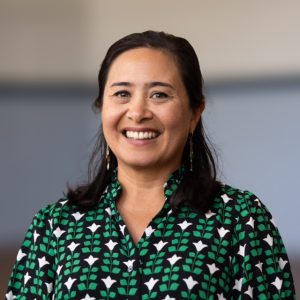 Angela Fortunato
Angela Fortunato is the Director of the Aster Study Center in Los Angeles. She holds a Bachelor’s degree in Biology, a Master’s in Bioethics, and a Master’s in Public Health, in addition to certifications in aging and teaching science. She has worked in bioethics and healthcare research and as a science teacher and school administrator. In 2025, Angela published her book, Wholeheartedly: God's Mystery of Love in the Call to Celibacy, and a The Way of the Cross for Students, available on the Youth Platform of opusdei.org.