Living Nazareth: Our Lady of Loreto and the Christian Home
“Mary sanctifies the ordinary, everyday things…
What a blessed ordinariness, that can be so full of love of God!”
St. Josemaria Escriva
Christ is Passing By, no. 148
The Holy House of Nazareth, preserved in Loreto, has been a place of pilgrimage throughout the ages. In this sandstone and brick home, Our Lady received from the Angel the message concerning her divine maternity. Devotion to Our Lady under the invocation “Our Lady of Loreto” is linked to this house of the Holy Family-a home carefully prepared by St. Joseph and made Mary’s home from the beginning.
Pope St. John Paul II prayed at the Sanctuary of Loreto, “Accept, O Blessed Mother of the House of Loreto, my pilgrimage and that of all of us, as a common prayer for the family life of all the men and women of our age. We pray for the well-being of these homes, that they may prepare the sons and daughters of all to enter into the heavenly dwelling place of Our common Father in heaven” (Address, September 8, 1979).
We also recall the pilgrimage that St. Josemaria made to the House of Loreto in 1951, when he consecrated the whole of Opus Dei to the sweet Heart of Mary at a decisive moment in its history.
THE HOLY HOUSE OF NAZARETH
Devotion to Our Lady of Loreto flows from the house in Nazareth where the Holy Family lived. Our Lady resided there after her betrothal to St. Joseph, and the holy Patriarch prepared this home to provide the best possible place for Our Lady and for the Child who was to come.
“Every home worthy of the name is above all a sanctuary created by the mother.” Pope St. John Paul II says, “She is the one to set it up in accordance with her particular personality.” God desires that “all children of the human family are born into the world within the protective warmth of a family” (Homily, September 8, 1979).
Pope St. John Paul II liked to say the family is “the sanctuary of life” (Evangelium vitae, Points 6, 11, 59, 88, 92, 94) and “the school of deeper humanity” (Familiaris consortio, 21; Gaudium et spes, 52).
The school of love. The school of the home. The school of the soul. These days of Advent are a particularly fitting time for this school of love-the family home-to live its mission in a special way.
THE ATMOSPHERE OF NAZARETH
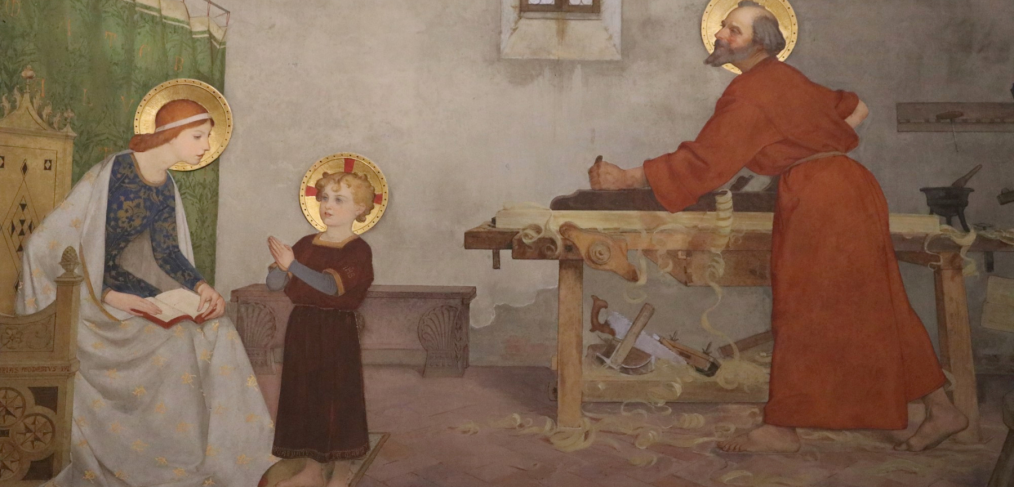
Mutual care and respect permeated the life of the Holy Family. Their home must surely have been a model for all Christian homes, having been clean and pleasant, complete with the kind of modest adornments that contribute to an elevated human tone of sensibility and good taste.
By staying close to Our Lady’s side, we will discover ways of practicing charity with those we live with, turning mundane material concerns into occasions of expressing our love for God with deeds.
St. Josemaria writes in Christ Is Passing By, “Mary sanctifies the ordinary, everyday things… What a blessed ordinariness, that can be so full of love of God!” (Christ is Passing By, no.148).
God desires that children be raised in a home similar to that of the Holy Family, where Our Lady as the mother was the heart of the home. The dedication of mothers to the immediate concerns of the home and to the upbringing of children is of fundamental importance. Through a thousand and one details; they nurture their children in the most significant commission entrusted to them by the Lord.
St. Josemaria reminds Christian couples that “the secret of married happiness lies in everyday things, not in daydreams” (Conversations, 91).
The Holy Family provides a model. St. Paul VI writes, “Reflection on their life in Nazareth is the school where we begin to learn more about the life of Jesus” (Address, January 5, 1964).
We can ask ourselves whether our homes reflect in some way the cheerful and friendly atmosphere of the Holy Family in Nazareth:
-
- Do we keep up a spirit of service through attention to detail?
-
- Do we make life pleasant for other members of our family?
-
- Do we keep Our Lord at the center of our minds and hearts?
-
- Do we practice Christian customs—Mass on Sundays, feast days, blessings at meals—together?
Pope Leo XIII wrote, “What a wonderful model of daily living the Holy Family offers us!” (Laetitiae sanctae, 3).
SELF-GIFT AND THE RHYTHM OF HOLINESS
Affection in family life largely depends on the heart of the mother. Pope St. John Paul II liked to say that children fundamentally learn love from their mothers. The father has a role to play, but the mother is much more key.
This affection also depends on the personal gift of self of every family member. Each of us is called to be aware of the needs of others and to safeguard the customs and traditions we treasure at home. We carry out our tasks with some element of sacrifice that we can offer for others.
In this way, our homes take on the flavor of the Holy Family. Seldom were there extraordinary events in Nazareth; everything happened with naturalness. God awaits us in the everyday services we render to one another.
Our Lord is not asking for spectacular sacrifices, but for dedication through the thousand small acts of service we render—greeting the tired with a smile, performing daily duties punctually, controlling our moods, refraining from overreacting, and promoting a cheerful family atmosphere.
CONCLUSION
The Holy House of Loreto reminds us that God chose a home—simple, hidden, and full of mutual love—to begin the work of our redemption. When we pattern our own family life on the example of Jesus, Mary, and Joseph, our homes too can become places where charity flourishes, faith is nourished, and everyday life becomes a path to sanctity.
This article is an excerpt from the meditation Our Lady of Loreto on the podcast “Fr. Conor Donnelly Meditations.” Tune in on Apple Podcasts, Spotify, and your favorite podcast app.
Cover Image: Workshop of Joseph the Carpenter (1886-90) by Modesto Faustini
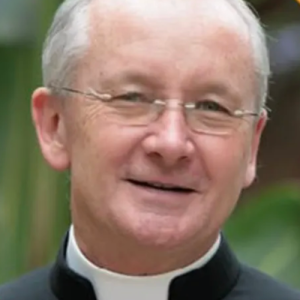 Fr. Conor Donnelly
Fr. Conor Donnelly is a priest of the Prelature of Opus Dei. He qualified as a medical doctor in University Dublin in 1977 and worked for a year at St. Vincent’s Hospital, Dublin. After ordination he spent 22 years doing pastoral work in Asia, in the Philippines and Singapore. He is currently an assistant chaplain at Kianda School in Nairobi, Kenya. "Fr. Conor Donnelly Meditations" is produced to help listeners pray and grow in their relationship with God. Tune in on Apple Podcast, Spotify, or your favorite podcast app.