Firstly, let me say that I do not think there need be any conflict between one’s family life and social life. Just as in a man’s life, but with particular shades of difference, the home and the family will always occupy a central place in the life of a woman.
The parents’ mission to educate their children in the faith stems from the sacraments. When they teach the faith at home, it is the Church that is teaching.
When the Magi prostrated themselves before Christ, what sentiments must have filled their hearts? They must have thought: All of our hardship was worth it.
The beginning of a New Year invites us to reflect on the areas of our lives that we want to improve, grow, or change throughout the twelve months ahead.
The readings for the Mass of Christmas night highlight several appearances: from Isaiah, a light has shone; in St Paul, The grace of God has appeared; in St Luke’s Gospel, the angel of the Lord appeared, followed by a multitude of the heavenly host.
What does the simple, admirable life of the Holy Family tell us? What can we learn from it?
In a season when Mary’s responsiveness to God’s will is continually before us, the Church in her Advent liturgy invites us not only to reflect on her perfect obedience but also to imitate it.
Whenever our Lady appears on earth it is to remind us of something that we are neglecting. She never comes to reveal something new, but to express in a new and forceful way what we should already know.
The theme of thanksgiving is inextricably woven into St. Josemaría’s life and books. In his collection of spiritual meditations “The Way”, he emphasizes the Christian’s duty to constantly thank Our Father.
Join the St. Josemaria Institute for our annual Novena to the Immaculate Conception from November 30 to December 8.
Our Lord is calling us to sanctify the ordinary tasks of every day, for the perfection of the Christian is to be found precisely there. Let’s consider it once more as we contemplate Mary’s life.
The feasts of All Saints and All Souls bring into focus the Church’s teaching on the Communion of Saints, highlighting the eternal destiny of all believers.
The Church dedicates the entire month of October to the Holy Rosary so that individuals, families, and communities would pray the Holy Rosary, if possible, on a daily basis for peace in the world.
Although we might associate St Teresa’s spirituality with the extraordinary—with her numerous visions, locutions, and ecstasies—yet for her, these were never the main issue, much less the goal of her prayer.
In her poem “Why I Love You, O Mary!”, Saint Therese of Lisieux says that the Blessed Virgin teaches her how to weep and rejoice—what to have sorrow for and what to rejoice over.
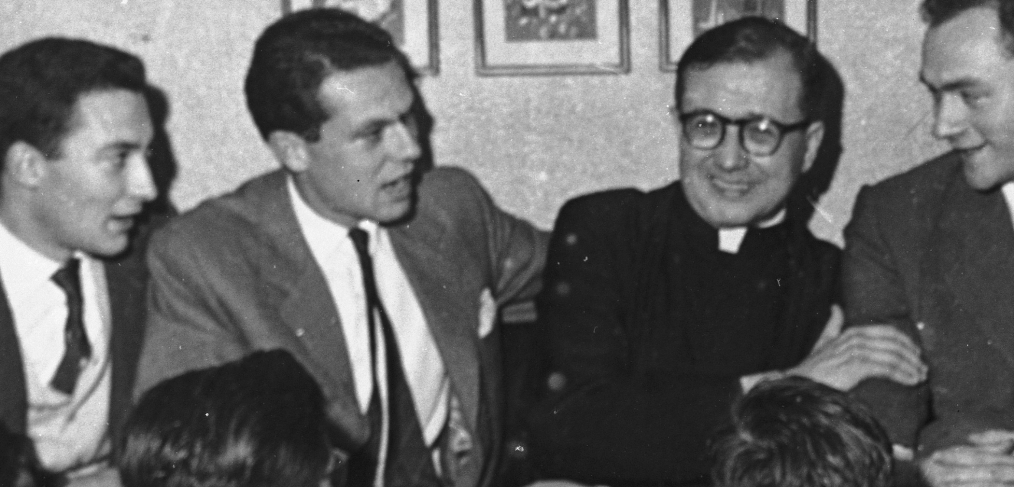
On April 15, 1967, in an interview with Peter Forbarth of Time Magazine, St. Josemaria Escriva explained the why and much more about the founding and mission of Opus Dei in the Church and in the world.
Study is not only a path to knowledge, but also a path to holiness. St. Josemaria Escriva reminded students and professionals alike that diligent study, offered to God, becomes prayer and apostolate.
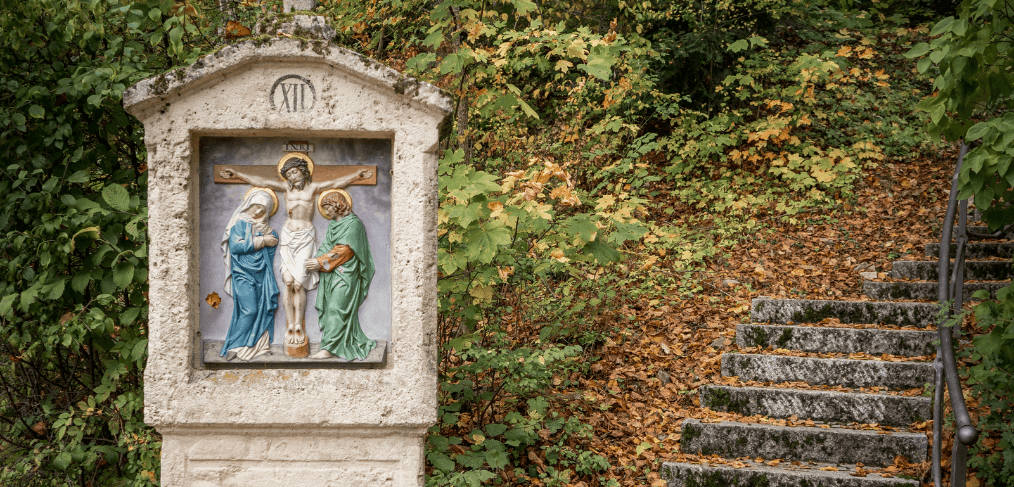
St. Josemaria Escriva believed that to be truly transformed by Christ’s Passion, Christians should constantly identify with Christ’s suffering.
St. Josemaria Escriva had a deep and personal devotion to the Archangels. He saw them as powerful intercessors and guides in the Christian life.
The devotion to the Seven Sorrows of Mary helps us to meditate on the events in Our Lady’s life when she lovingly and willingly united herself to her Son’s self-giving and sacrifice on the Cross.